[00:00:00] My wife and I often joke that we work in a boomerang factory, you try to give something away to somehow fly back to us. Welcome to Christ In All Things, a conversation about meaning and purpose. It's based on a verse from the Bible, Colossians chapter 1 verse 17 which says,
[00:00:24] Christ is before all things and in him all things hold together. Christ In All Things is a listening ear into conversations about receiving and giving, the love and hope of Christ.
[00:00:36] These conversations are an invitation because as much as you hear and as much as we enjoy having them, digital media operates from a distance and that's not what's best for us with God or with one another. So thanks for listening.
[00:00:52] And if you're in the neighborhood, we invite you to participate in person in the life that finds a tapah center at St. Paul's Lutheran Church, 210 East Pleasant Street in O'Connor, Wisconsin. Welcome listeners back to Christ In All Things.
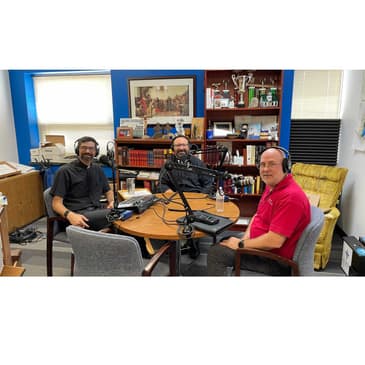
[00:01:13] We have in studio here Dale Strato, who is the CEO president, President, who of Strato Enterprises incorporated Dale, if someone was looking to find your business where would they go? Internet would be straddle.com, STRAT-IL dot com dot com.
[00:01:34] Very good. And if they were looking for your business, they would be looking for someone to help them with computer, networking, networking, connectivity, security, making sure things are backed up and protected disaster recovery. Ooh, disaster recovery. That's a fun one.
[00:01:52] I bet this is story. Well, that's part of it. Did I tell you one of my professors had to go to a business like yours? And I won't say who it was, lost his entire biblical commentary.
[00:02:06] Like one of those can one of those big blue guardians publishing house, commentaries on a gospel, lost. And thanks be to God for somebody who has those gifts recovered literally years and years and thousands of hours of labor. I probably know which one.
[00:02:31] So we could talk about that later, but anyway, that's all in front of us. That's what customers for backup are those that have lost something. Well, and that works with the name. Yes, so if you caught up the sort one there, straight old bohemian means lost.
[00:02:47] So that works well and whether you're able to share that with people who have lost something, might give them a little comfort in the midst of it. Dale as we come back to this conversation with you,
[00:02:59] we want to focus in this bit on the top three to five things that have really shaped the business that you own, and you're going to operate into what it is. So can you think of what that might be?
[00:03:18] Again, I'm not going to say there's any aha moments that you knew at that point in time. I think it's all things again that dove tail together. It's just the family. It's the mother and father, the supportive family all through school,
[00:03:30] being pushed but being supported at the same time. They want more for you so you learn to want more for yourself type of thing. So having a good family support group around you is a great thing that then pushes you in.
[00:03:42] And then you also have the Christian background that is always influential. If you're doing it correctly, it should form who you are. It shouldn't be something just to do on Sunday morning to appease God. That's the wrong way of doing it.
[00:03:54] When it becomes a part of you, then you can practice it. And that's a huge part. And then with that it's just other people along the way. And then there's a lot of things that you can do. You can do what you should be doing. That's interesting.
[00:04:10] Because he just said early on. Good customers help you. That's exactly it. That goes back to the relationship. And then you know, you're going to have to do it. That's interesting. Because he just said early on. Yeah. That's exactly it. And that goes back to the relationship.
[00:04:33] It's not just a business relationship. You learn to like them and know them and their family, things like that. And that's where the give and take. And that's where the relationship really becomes solid. We don't look for new customers because we retain our customers. And I've never advertised.
[00:04:50] I've only grown through referrals and gaining customers that way. That's saying something too. It is about what shaped and formed the business. And I'm really seeing this theme of you invest in the relationship and allow the business to grow from there. Definitely.
[00:05:10] And sometimes it can be even frustrating, but you have to come back to your core and why you're doing it. Sometimes we feel like we care more about the data and the computers and the customer does. And it's like you don't understand how important this is.
[00:05:22] But at the same time they do because you're there. Which might be well why they buy those customers. Those businesses have engaged in this business with you because they know how much you care about the data.
[00:05:32] Definitely. And over time they give you task because they know you're not going to let go of it. Tell it's solved and they know that over. They just become reliant upon that type of problem solving solution. That's what they're looking for. Forgive me, the how many.
[00:05:46] Do you have a number how many customers do you serve presently roughly roughly probably a hundred on an annual basis? Okay. And how many of those are repeat? I would say that the top half are probably really repetitive.
[00:06:03] Some on a weekly basis, some on a monthly basis, some than less than that. But I'd say we have probably our, I don't know, probably our top 75% of our customers are probably in our top 25 customers. Things like that relationship. It's kind of like in church the 80 20 rule. Yeah.
[00:06:25] And you said some of these have been customers of yours from the time the enterprise began. Correct. That's yeah, that's very true. And so we were putting in things that don't even exist anymore at that time.
[00:06:37] Have grown with the business, have grown through the relationships family own father passed down to us on as well. And those types of things, so you know them. You know the family, you know all the employees who've been there longer than most.
[00:06:50] So you know the culture, you know the people you know what they're looking for. You know I'm well, sorry. I told you you just jump buddy. Go. I'm interested in. You know it's one thing. On Christian entrepreneurship and you talked about the moral compass that forms your decision.
[00:07:11] Which I would imagine all things considered is easy when you're a simple enterprise. But then you have to hire people and how do you be a Christian enterprise when when that employee base expands? How do you how do you continue to be who you are?
[00:07:39] So some things don't change and some things change drastically. There's some things that I like. I do service other Christian schools and churches and things like that as well. It's great to see them to be able to start their day and prayer and do that type of thing.
[00:07:54] We can't do that because you could ostracize somebody they could complain. They wouldn't like that they think something's being forced upon them.
[00:08:02] So in our own environment in the office you still act and project those same values in that same way. That doesn't change what you can do and say sometimes you've got to kind of curve or you know. So you don't have daily chapel at straightaway enterprises exactly right.
[00:08:18] Gotcha. Or start the morning with prayer and devotion. Correct, but I can still buy my head and pray and give thanks before you get in touch. Yeah. You're the president. How about how about I'm just going to tell you how I see wise. Yeah.
[00:08:31] Business policy wise business policy is going to be the same. I mean, it's being on top, you know, being on time for your job doing your job. Those types of things that's just what you expect and those expectations come out fairly quick and easy.
[00:08:45] I'm not as worried about employee manual as I am about just doing your job getting things done and then you can be flexible. You look for adult relationships. You look for adult employees that can kind of run their own life that you're not running it.
[00:08:57] But that's what happens as you grow and get bigger and bring other people in. It brings a lot of drama and sometimes you've got to hold that own. It strikes me that when you're, I mean, so you're hiring somebody and that's.
[00:09:12] Got to be one of the major challenges of operating your business because you have your values and your business is centered on. Understanding the. The customers needs and in in being less concerned about the dollar.
[00:09:34] Then doing the work to which you've been called and you just got to repetitively express that and let the employees know that that's that's why we're here. It's about that relation. I tell employees constantly anyone can sell windows anyone can sell a computer.
[00:09:49] I'm a service that comes along with us, that's going to separate us. It's what you give them it's listening to the customer solving their problems. That's what differentiates. It's not the commodity that we're selling. What's the so. Okay, I'm going to jump in here.
[00:10:04] There has there has there been a moment in the life of the business that you can put your finger on when that was tested. Oh, that's yeah, that's tested all the time when it comes to invoice disputes when it comes to things like that.
[00:10:17] You then have to work through that. Was, is there a big one that you can think of that you can actually talk about that. That we can.
[00:10:24] That necessarily naming that was our naming names where you can go okay, you know what that was a moment when this policy that I operate on was really tested and this is what I learned.
[00:10:33] Well, I would say like in an invoice dispute when something comes up to be much higher than someone's expecting or goes outside on time material it's outside of a cool. So I've sent something wraps up more hours more time and they get something they're upset about it whatever.
[00:10:47] That comes back and now you how you handle that is everything and I'm not going to say I've won every one of those are had to end up the way I wanted. People see things differently.
[00:10:58] Yeah, the biggest thing is you got to go in with an open mind if it's all about the money that's all you're going to argue is on that basis if it's about the relationship you're willing to give up more.
[00:11:08] You know upfront as far as the money or the invoice goes and think okay over time if this is a good relationship it's a lucrative you know.
[00:11:15] Relationships and overtime will make that back will make it good and we'll go on and that's part of your under promise over deliver correct yeah so you. Did you always operate that way or have you learned to operate that way over time.
[00:11:32] Now I think that's been from the beginning. That's pretty much it hasn't always been I started out very early on and one of the things that one of the customers told me was that I was I wasn't charging enough in the industry and what was going on you know I would I started out you know 25 dollars an hour in a handshake.
[00:11:50] And you know they're saying other people that are offering what you're doing at your skill and ability level you should be much higher than that.
[00:11:57] So I found out I was actually losing jobs because of my rate and so I actually increased my hourly rate and picked up more work because they saw that okay now you've got to be you know better at what you're doing because you're serious.
[00:12:09] Yeah because if you're only charging you know a nickel then people are going to expect a nickels worth of work exactly right yeah. And those are things you learn all our time that they don't teach you in school.
[00:12:20] Yeah kind of like the laborers worth this higher indeed I think I've read that somewhere before regarding the service of the gospel.
[00:12:28] All right so that's what's you know let's pin that as a thing that you've learned over time and experience something that happened that really framed how you operate as a business is there another one.
[00:12:43] We used to have a lot more problems hardware and reliability of components weren't as good as they are today and you would have a customer go down a catastrophic failure and basically their businesses on the line.
[00:12:56] And I've spent 48 72 hours straight at a customer site getting them back up and going yeah again at that point in time it's not about the dollar it's not about the hourly wage it's now about getting this person back up and running and making them whole and that's what.
[00:13:11] Yeah and doing that and putting in that time and effort one is needed is what secures that relationship and why they're not looking to replace you. And I know it's not about the way just not about the hourly basis it's about the integrity of the business solution.
[00:13:24] It's kind of like being there right that's that's what's I'm struck at the moment we're going to talk a lot this next year. Yeah about friendship I'm struck by the parallels. I'm not surprised.
[00:13:41] Well, I guess I guess I am and and I'm not surprised because when Dale when you talk about. Integrity and vocation and relationship the these are things that I see or I I have experienced in my own vocation.
[00:14:02] And as pastor and and when you invest in people and when you take the time to be there and when you're the same guy all the time whether things are going really well or whether it's a challenge.
[00:14:15] People learn to trust you and and likewise in your in your entrepreneurial vocation your customers over 30 years some of them have been with you know to trust you.
[00:14:28] Part of that is because when there's a crash you're there and you're willing to be there to get them home to put them back together to make their business run.
[00:14:41] I think there's some similarity what we do pastor at all is were there for people and when when life hits the skids or when. And that which can occur in a fall in creation occurs rapidly.
[00:14:58] The important thing is that we're there and then people know that they can call us and will be there.
[00:15:06] Yeah, that's absolutely huge in the relationship and and that's the same thing customers give us a work to do that they could do if you wanted to sit on hold for two hours and go through the ring roll and do all that type of stuff they could possibly do it on their own but they're focused on running their business.
[00:15:21] Yeah, they want us to take care of those types of things so they don't have to and they can focus on what needs to be done. So they're comfortable in handing that off and having you do things that lightens their load and let's their focus.
[00:15:31] You know better on their business. So there's a lot of that that happens and knowing that you're there and you can do things. Yeah, I could do up. I don't have all day to do it. So you can do a quicker faster more efficiently.
[00:15:42] It's going to cost me something but that relationship they know that it's it's worthwhile. There's an x6 parallel in there too. Phil is thin. Okay, so the apostles are preaching the gospel and that's their primary concern.
[00:15:59] That's their primary vocation as they've been called by God to do so and a complain arises from within the people that have now heard the gospel and rejoiced in this gift of forgiveness and life and salvation.
[00:16:10] And the apostles want to hand it off to say, we want to focus on prayer and the teaching the word.
[00:16:19] So you guys choose from among you men full of the spirit of good reputation and will appoint them to the task of managing the distribution of resources or the feeding of the widows and the orphans and the poor.
[00:16:34] And they do and so Dale what you're saying is even in the business world this happens. And part of your business is to come alongside of a business that has this other vocation and say we'll take care of that man of managing that aspect.
[00:16:54] So you guys know you don't have to worry about it. Even though you could do it yourself, you recognize there's a there's a good in investing in others to accomplish that task. Christ in all things boy, just flies doesn't kind of work.
[00:17:11] Okay, so Dale, there's two right being able to be there for somebody when they're when their business crashes or when there's a catastrophic failure. The relationship investment so that people know they can trust you in that integrity.
[00:17:28] So presence relationship is there another is there another and I want to phrase this a little differently, is there another pillar another key aspect to how straddle enterprises operates.
[00:17:42] And the key one again going off the relationship aspect is that my wife and I work together through this whole thing. And we hear so often I could never work with my spouse every day and which is unfortunate, but I get it for some people they couldn't.
[00:17:58] Having the same value in the same thing. She knows why I work late.
[00:18:04] She understands she's as invested as I am and she knows what we have in this. So to have again that kind of support that someone that you can talk to bounce things off then when you need to.
[00:18:16] That type of thing is paramount in what we do that we have each other, we have a common goal, we have a common focus and that makes things very easy. So which leads me to a personal question.
[00:18:32] I imagine there you this is a family business. Can you turn it off? No. So when you go on vacation as a family, I've taken phone calls from customers in cornfield and Iowa and I'm mountain didn't call around.
[00:18:55] I'm a hunting trips fishing trips extremely hard at least I have to check in certain things. My texts are out in the field, I'm their support. So if they've got questions or need about something offer how to handle a situation you've got to always be somewhat available.
[00:19:12] And the nice thing is they realize that as well and when things need to they bring it back to me because they know they like that I can handle it, they know the customer likes that I can handle it.
[00:19:21] And so that constantly comes back. So my wife and I often joke that we work in a boomerang factory, you try to give something away to somehow flies back to you as That's a great line. We're going to boomerang.
[00:19:36] Yeah, there's your quote for the teaser indeed my wife and I work in a boomerang factory. Yep. Okay, relationship integrity presents the family aspect of it that really models your life together is a whole shared life together.
[00:20:00] And at the center of that is a shared faith correct for you and Kim. And I don't want to give the false presentation that this is built from this from day one and always bend this way.
[00:20:16] Your faith is something that grows or should grow as you get older and more mature you understand it better. And I think that's happened with me as well. I grew up very much under the context of work harder, you get more in return type of thing.
[00:20:30] So it took a while for that to do a 180 and find out that it's not all about you really. Yeah, you start out thinking that, you know, well, God gave you this wife and God gave you this daughter and it's for years to provide again.
[00:20:43] And that's not always the case because God can take those gifts away as much as he gives them to you. And that's where you're, that's where your your aspect and everything changes in that focus changes. It's not about you and how hard you work.
[00:20:55] It's about how you do your work. And it did not start like that from the beginning and every aspect but that's what it's turned to to meet a figure out that those gifts are gifts of God. All of them your your wife, your daughter, your family, your customers.
[00:21:08] Those are all gifts from God and treat them accordingly that they can be taken away. They can be a growing, they can be however he wants to handle them. Let him do that direction and you just show up for work and do a good day's work.
[00:21:22] You're feverishly writing, Pastor. I wanted I wanted to see if I got that right because I did seem to me an interesting quotation. It's not about how hard you work. It's about how you work. Correct. I like that. Kind of like work smarter and not stronger.
[00:21:38] You're brain, not your back. Yeah, did you steal that from somebody or is it a straightalism? No, that's just I guess a philosophy of how I've come to see things and how I do things that you know.
[00:21:49] And I'm not taking away anything from a guy with a shovel. I've done that. I still do that. There's there's physical work that there's you know reward in that as well. That's not what I'm saying.
[00:21:59] What I'm saying is just be smart about your job and what you're doing. And that is part of what is framed straightal enterprises incorporated. That's how you work. Yeah, how you go about what you do. Correct. That's the differentiator. Yeah.
[00:22:14] What's the and you don't have to answer this question? My experience has been most of what we learn is through failure. Are you willing to talk about without naming names? Something that you've learned as a business through failure?
[00:22:37] Well, I don't think we have enough time for all those. No, we don't need to know all of them. Just pick one. But again, starting out small and starting out with things I can remember a $200 video card being
[00:22:51] You know, blown out because of tech, you know, doing something. Sheen to done and that comes out of your pocket. You can't go back to the cost we can't do anything else. You eat that and you go on.
[00:23:01] What you do learn from that sometimes you have to put something, you know, put something in place that a policy or procedure, something like that to frame it. And that's something else that we've done is we've, we frame those types of things so becomes more repetitive.
[00:23:14] So you don't have to think about everything different each time. Every job is a little bit different. But if you frame it and you have some policies and procedures in place. What do you mean by frame it? Because you've said that and you've done the same hand action.
[00:23:25] What what you're what you're doing and what you're working on can be framed. How you started job, how you documented job, how you go through, how you troubleshoot. And the policies and procedures around that.
[00:23:35] How a phone call comes in is something needs to be quoted who does it go to. Just all those policies and procedures that you build when you start a business on your own. The handbook isn't there, you're writing it.
[00:23:45] And so those policies and procedures you put in place. That's what forms that and some of that is because of mistakes you've made. You don't want someone else to make it. You've already made it learned from it and let others learn from it.
[00:23:57] And and you actually write the handbook. Correct. Which my guess is not everybody does. So there's a there's a wisdom in that. There is but it's it's a never ending task.
[00:24:14] There there's always going to be something that's going to circumvent the policies and the procedure to put in place. You're going to have this one off thing that you never thought of.
[00:24:22] Now do I need a policy and procedure for it or do I need to need to need to need to need to don't figure how to deal with this one time. I want to have one more thing. You said this a couple of times being adult.
[00:24:35] What does that mean? Some of that can think on their own come up with a solution. If you know what our hours are, I shouldn't have to tell you when to show up for work and when we end work.
[00:24:46] It's just hiring adults that can they have some grip of their own life. They can do their own thing. I don't want to deal with those types of things in your life.
[00:24:54] If I've got to tell you multiple times what time we start and how to get here, you're not the right fit for this company. That makes sense.
[00:25:01] It strikes me we've discovered something similar over here at here at St. Paul's as well over the years and is that the people who do best here. I understand that whether they have a formal divine call from the church or not, that whatever they're hired to do.
[00:25:26] That this is an office of service. They're part of a tapestry. Yeah.
[00:25:33] And they may be only a thread in it, what they're part of it and you've got to figure that when it's all about you and that's part of the problem of the Facebook and some of those things. It's all about you and expressing to people what I have.
[00:25:44] This is my card looks like this is my vacation. That's where you run into problems because you run that roller coaster, your highs are really high or lows are really low. Because everything's about you.
[00:25:52] And when you find out that you're part of a bigger machine and just need to work with it, work every what you do makes someone else's job easier and you become part of that. That's what helps and that's what makes again going back to being an adult.
[00:26:03] You mean like. And I'm going to say this in a probably wrap us up. You mean like we're all part of one body and we all have different roles and we're all different parts of the body.
[00:26:18] And just because I'm not an eyeball doesn't mean I can't say to the nose, I don't need you. And just because I'm a I'm an ear and I wouldn't say that. Right.
[00:26:29] Just because it's not only that it goes further than that because everyone's aware that they have an iron ear. Yeah. Are you a pancreas? No, I don't have one of those. Well see that.
[00:26:38] But are you are you an insufficient part that no one knows about the vascular system below the half or whatever it may be that you're still part of that that is still one of the members.
[00:26:48] And no matter how sufficient or insufficient you may think it is, it still needs to be there and it's an important part if you didn't need to be there you wouldn't be there. Yeah, but you are right. So do the best at it. And that means you're important.
[00:27:00] Welcome to life in the body of Christ.
[00:27:03] This has been a real treat. I'm super thankful and we could we could chat for a while longer but but we're up at time. I want to give, I think we should give you an opportunity for maybe a closing closing thought a little commercial maybe yeah.
[00:27:17] Well the one thing I did want to bring up that I reluctantly wasn't able to. You asked about some of the influences of life and things I've gone there. Pastor Suflo who baptized me. We separated at a point in time then we came back together at church.
[00:27:32] And I was able to spend a lot of time with him and his later years become very close with him and end up being a Paul Bear at his funeral. Wow.
[00:27:41] So that type of relationship, that's something that's just unique and special especially with your pastor that who cataclyde you who you know had a lot of influence in your life. That's something special and those are, those are the things with relationships that you can't get into paycheck.
[00:27:55] And that have helped form absolute. Absolutely, absolutely, even within your business. Dale it is I am continue to be blown away just in the man that guides me and the opportunity sees plays before you and how he shaped you through them.
[00:28:11] So thank you for sharing them with us here at Christ in all things and here at St. Paul's in our life together. I can't wait to see what's around the corner that God is going to provide for us.
[00:28:22] For show notes and other information about Christ in all things visit Christinallthings.org. Comments may be emailed to comments at christinallthings.org. We're thankful to provide Christ in all things to you as a gift, but it's not free to produce and distribute.
[00:28:51] So if you'd like to help us make Christ in all things a self-supporting show and have a little fun in the process, please click the support page at christenallthings.org.
[00:29:01] A donation of any kind gets you a dozen environmentally friendly, Christ in all things straws to share with your friends. Pastor Shackman loves these. That is so not true. You love those way too much and I still can't believe you bought them.
[00:29:13] A donation of $200 or more gets you some cheerful on-ear clapping. And a pair of Wisconsin-made Whitlam hiking socks. A donation of $1,000 more gets you thunderous on-ear clapping. And a handmade Christ in all things leather folio by the murty creative company.
[00:29:34] If you want to donate more than that, well fly us wherever you want and we will record Christinallthings at your chosen location within reason of course. All post-production surplus supports youth ministry at Saint Paul's. Thank you for your support. Christinallthings is a production of St. Paul's Lutheran Church.
[00:29:53] 210 East Pleasant Street in O'Connor, Milwaukee, Wisconsin. For more information about St. Paul's visit splco.org email us at infoatspco.org or The Old Fashion Way give us a call. 262-567-5001 intro and out from music setting by Joseph Hurl copyright 1998 Concordia Publishing House used with permission.